Showing posts with label emissions. Show all posts

Monday, 3 September 2018

Flying is bad for the planet

  • Flying may be a large portion of your carbon footprint. The aviation industry accounts for 11% of all transportation-related emissions in the United States. Take one round-trip flight between New York and San Francisco, and you’ve generated about 0.9 metric tons of carbon dioxide per person. That is equivalent of 20% of the greenhouse gases that your car emits over an entire year. 
  • For perspective, the global average was about five tons of carbon dioxide per person in 2013.
  • Carbon footprint is defined as the amount of greenhouse gases and specifically carbon dioxide emitted by a person's activities or a product's manufacture and transport, during a given period.
  • A typical passenger vehicle emits about 4.6 metric tons of carbon dioxide per year. In addition to carbon dioxide, automobiles produce methane and nitrous oxide from the tailpipe and hydro fluorocarbon emissions from leaking air conditioners. The emissions of these gases are small in comparison to carbon dioxide; however, the impact of these emissions have a higher global warming potential than carbon dioxide.
  • About 20,000 planes are in use around the world, serving three billion passengers annually. By 2040, more than 50,000 planes could be in service, and they are expected to fly more often.
  • The most effective way to reduce your carbon footprint is to fly less often. The longer the distance, the more efficient flying becomes, because cruising requires less fuel than other stages of flight. So it’s certainly better to fly cross-country than to drive solo. If you’re taking a short trip, it may be better to drive.
  • Flying nonstop can help. About 25% of airplane emissions come from landing, taxiing and taking off. 
  • When you buy carbon offsets, you pay money toward replanting trees, which absorb carbon dioxide from the atmosphere.
  • To offset the almost 0.9-metric-ton carbon footprint of a single passenger traveling from New York to San Francisco, Sustainable Travel International, which runs offset program, offers two choices: Donate $8.95 to a wind farm in Texas or donate $10.75 to a forest conservation program in Peru.
  • The emissions associated with flying in business class are about three times as great as flying in economy class. In business class and first class, seats are bigger, so fewer people are being moved by the same amount of fuel. A first-class seat could have a carbon footprint of nine times as an economy one. Economy passengers have something to be happy about: smaller carbon footprints.
  • The bio fuel is estimated to cut at least 60% of greenhouse gas emissions compared to regular jet fuel. It cuts the emissions used to make the fuel as well as the emissions from burning it.
  • Researchers say that airplane crashes kills about a thousand people annually, whereas plane emissions kill about ten thousand people each year. About 80% by cruising emissions at high altitudes and 20% due to take off & landing emissions causing cardiovascular and respiratory diseases. 
  • Airplane pollution deaths at 10,000 a year still represent a small share. Emissions from ships kill an estimated 60,000 people a year, according to a 2007 study. The annual total death toll from air pollution is about a million, according to the UNDP.

Public transportation must be subsidized and encouraged in every form, especially if it is using electricity. Usage of personalized transportation must be restricted, discouraged and penalized. Business class & first class air travel should be discouraged and penalized. Pollution control norms for automobiles, industries etc must be strictly enforced. Environment safeguarding awareness must be promoted and encouraged.


Tuesday, 10 April 2018

Solar Energy - Limitations


As per the Paris Agreement, India committed to increase the amount of electric power from clean energy resources to 40% by 2030. A total of 175 GW of renewable energy installed capacity was promised to be achieved by 2022, of which 100 GW is the target set for solar power alone.
  • A performance analysis study by a pioneer in the power generation industry, calculated that for every megawatt of solar power capacity installed, an average output of a mere 19% is extracted.
  • In a recently set up ‘the world’s largest solar power plant’ in Tamil Nadu and Gujarat is with a total capacity of 40 MW, the electricity generation of this plant is about 63.8 million units, merely at 18.2% of its total capacity. 
  • For obvious reasons – night, monsoons, dust, storms – solar power is neither produced all day nor throughout the year. Thus, solar power plant's capacity utilisation factor (CUF)  will never exceed 20% of its capacity.
  • The lofty cost of rooftop solar panels overrides the tangible benefit in the eyes of customers,  despite 30% subsidy. Due to the instability in solar power production, the dependence of households with rooftop solar on coal based electricity/diesel generators will persist.
  • A far bigger problem is that solar power is given preference when supply exceeds demand, so thermal plants have to back down. The plant load factor (PLF) or capacity utilisation of coal-based plants was 76% six years ago, but it is now just 58%. Above 70% PLF Thermal Power Companies are profitable, at 58% they are in trouble and at 48% they would go bust.
  • Solar power looks great when the sun shines, but stops at sunset, just as power demand soars to its evening peak. Much thermal power has to remain idle during the day, ready to pick up the slack when solar production suddenly stops. This forced idleness carries huge costs hidden by ostensibly cheap solar power quotations.
  • Solar power appears cheaper with provision of cheap land, tax subsidies, incentives, accelerated depreciation, viability gap funding and capital equipment subsidy. Once these are all removed the picture will be different.
  • The true cost of solar power (sans implicit and explicit subsidies) at Rs 6/unit without storage and Rs 8/unit with storage. A captive coal-based power station working flat out yields power at just Rs 2.50/unit, far cheaper than solar power. 
  • Solar costs are falling fast. The slower we go, the more solar costs will fall. So speed is not a virtue. Raising solar targets repeatedly looks green and good, but has hidden, potentially disastrous costs.
  • Both thermal and solar capacity creation must slow down. Breakneck speed for solar power will break the neck of thermal plants and banks.
  • The deceiving picture of the output from a major component of renewable energy and the promise of government for 24×7 electricity for all, the idea that India’s dependence on coal based power will decrease in the near future seems naïve. 
  • The government has not reduced its coal output targets and plans to raise coal output from the current 550 million tonnes to nearly a billion tonnes by 2022.
  • The much advertised ten-fold increase in solar power may seem like a game-changer for the renewable energy sector. But on close examination it becomes clear that the power yield from this increased capacity on an average will be as little as 20% of the total capacity, and this will make little difference to India’s emissions.


Guaranteeing 24x7 power supply is a gigantic task. In the absence of economic batteries, solar energy suffers from its limitations. However it is very cost effective for remote villages, agriculture pump sets not serviced by regular sources of electric power. In cities and towns it could be used for water heating and for reducing electricity bills. Much of power demand for commercial, domestic and street lighting occurs during evening and night hours and has to be met from non-solar resources only. With all its limitations, still solar power could be used to reduce power demand during day time hours. The higher the solar power generation the higher would be stand by sources of power thus efficiency of power sector gets reduced translating into higher tariffs apart from creating power system operational issues. Therefore, solar power can never replace conventional resources of power fully and at best it could meet 20-25% power demand. 


Wednesday, 7 February 2018

We must quit coal


We have far more oil, coal and gas than we can safely burn. Fuel is enormously useful, massively valuable and hugely important geopolitically, but tackling global warming means leaving most of it in the ground – by choice. Coal is the dirtiest of fossil fuels. It produces per kilogram the least amount of energy and the greatest amount of pollution. Coal supplies a third of all energy used worldwide and makes up 40% of electricity generation, as well as playing a crucial role in industries such as iron and steel. The coal industry stands in the way of a safe and healthy future for us all. From destructive mines to polluting stacks and toxic ash dumps, coal lays waste to our environment. Coal threatens our most basic needs: clean water to drink, clean air to breathe, and a safe climate. 
  • Fossil fuels are a finite resource and each year they get more expensive relative to renewables and nuclear.
  • India is the world’s second-largest coal consumer last year.
  • Despite legitimate concerns, coal use will continue to be significant in the future. Therefore greater efforts are needed to embrace less polluting and more efficient technologies to ensure that coal becomes a much cleaner source of energy.
  • The burning of coal for heat and energy is responsible for 46% of carbon dioxide emissions worldwide and accounts for 72% of total  greenhouse gas (GHG) emissions from the electricity sector. They also  fuel global warming, making coal the single greatest threat to our climate. Coal mining is also a source of methane, a very potent global warming gas.
  • The coal industry uses fresh water enough to meet the basic needs of 100 crore people. We are already at risk of a global water supply crisis. Adding further strain on our water supplies, pollution from coal mines and coal plants contaminates groundwater and waterways.
  • Between 2001 and 2010, world consumption of coal increased by 45%. During the same time period, total anthropogenic GHG emissions were the highest in human history. 
  • Mining and burning coal release harmful pollutants into the air. These include mercury, fine pollution particles, and chemicals that form smog — all damaging to our health. Pollution from burning coal also leads to acid rain, which kills fish and plants and damages soils.
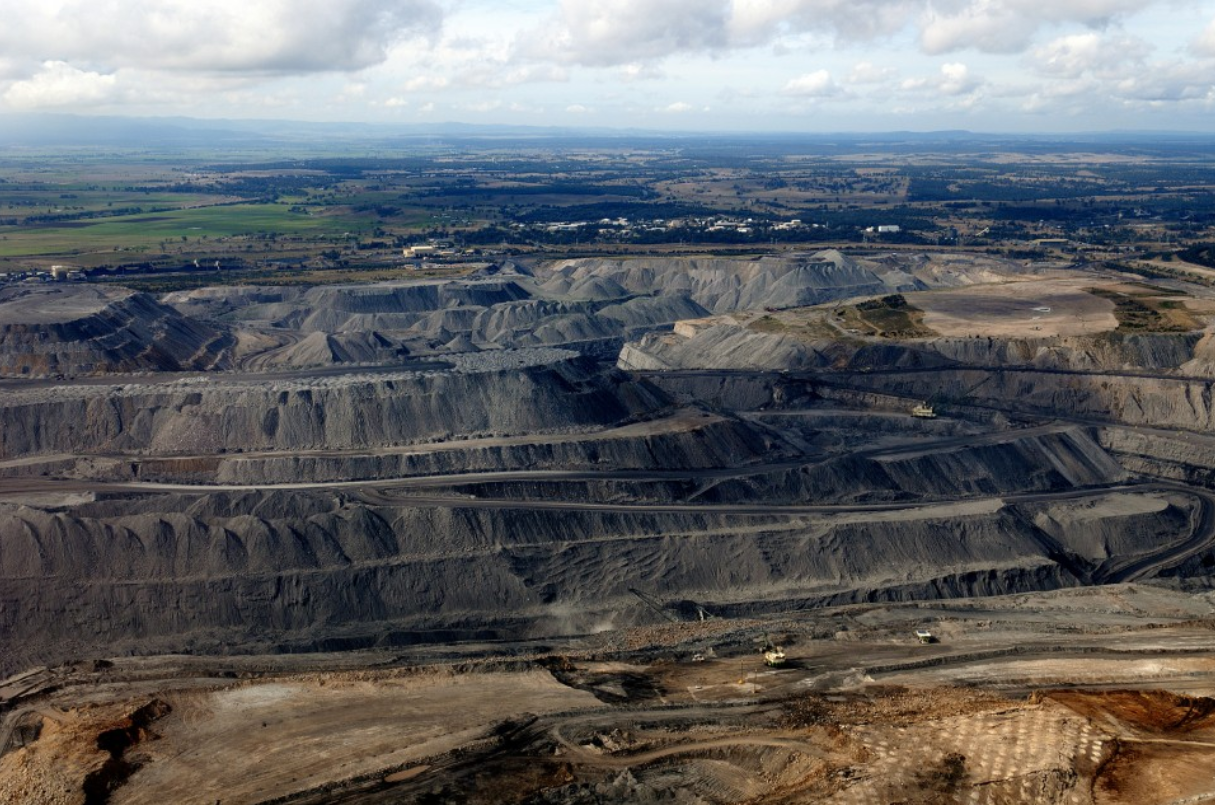
  • Open-pit, open-cast or open cut mining disturbs landscapes on a vast scale, destroying forests and scraping away soils. So severe is the damage, in most cases it cannot be repaired. When mines unearth and disturb rock and earth, toxic chemicals within can mix with water. This leads to acid main drainage, harmful to streams, soils, and plants, animals and people.
  • People living near the destruction are 50% more likely to die of cancer and 42% more likely to be born with birth defects compared with other people.
  • Shifting to clean, safe solutions including renewable energy; close down coal power plants and prevent new ones being built.
  • Coal industry's true costs including the harm it does to our air, water, lands and health are enormous.
  • 23 countries, states and cities will have either phased out coal-fired power plants or set a timeline to do so by 2030.
  • To avoid catastrophic climate change, it is clear that we must end our dependence on coal and invest in affordable and sustainable renewable energy. We need make the shift to 100% renewable energy as soon as possible.
  • The renewable "fuels" used — sun, wind, water, and heat from the earth — are unlimited and free for the taking. It's an obvious advantage over volatile costs of fuels needed to power coal, oil, gas and nuclear plants.
  • Greater energy efficiency is key to a clean, safe and secure energy future for all. We must make better use of energy from the sun, wind, water and earth. Efficiency is all about smart use of energy, not doing without. It saves us money, helps the environment, and improves our health and comfort. It is to get things done using less energy.
  • It’s time we end the age of fossil fuels and help workers and communities transition over to renewables.


With less than 1C of temperature increase so far, we are already seeing some profound changes, including a collapse in Arctic sea ice coverage. It is impossible to say what changes another three or four degrees would bring, but the impacts could very plausibly include a collapse in global food production, catastrophic droughts and floods, heatwaves and the beginning of ice-sheet melt that could eventually raise the sea level enough to wipe out many of the world's great cities. But can we bring ourselves to prioritise a safe planet over cheap fuels, flights, power and goods? Can humanity muster the restraint and cooperation needed to leave assets worth trillions in the ground?