Showing posts with label coal. Show all posts

Tuesday, 2 July 2019

Low carbon lifestyle

Global warming can lead to irreversible changes in the delicate balance that exists in the planet’s climate and life systems. It is a growing crisis with large scale implications on mortality, health, economics and security. All of us will be affected, irrespective of economic status or nationality. We have still not reached a point of no return and the most dangerous climate changes can still be avoided. We need to make climate friendly choices in everyday actions in the use of electrical appliances, transport, paper, water, etc. A low-carbon lifestyle reduces greenhouse gases and saves resources. Many people don't know a lot about climate change, but then there are some people who know but who don't care. It is reported that the 2015 UN Climate Change Conference (COP 21 or CMP 11) held in Paris, France, has emitted about 300,000 tons of CO2.
  1. Consume less energy from fossil fuels (petroleum, gas and coal).
  2. Use energy efficient lights, fans and other electrical appliances.
  3. Turn off lights and fans when not in use.
  4. Switch from a desktop to a laptop.
  5. Go out for a couple of hours everyday instead of watching TV or computer.
  6. Avoid using hot water, wherever possible.
  7. Go solar where ever possible.
  8. Buy clothes when it is a must.
  9. Choose cotton and silk clothes. Organic cotton is even better.
  10. Donate unwanted clothes to charities.
  11. Buy local food products.
  12. Choose organic and seasonal foods.
  13. Avoid meat and dairy.
  14. Use organic foods to reduce use of fertilizers and pesticides.
  15. Don't waste food, energy, water etc.
  16. Select natural products with less processing and packaging.
  17. Eat more vegetables and fruits.
  18. Travel only when it is absolutely necessary.
  19. Avoid car usage where ever you can.
  20. Use small and fuel efficient cars.
  21. Drive car in a fuel efficient manner.
  22. Use public transportation or shared vehicles.
  23. Walk or cycle over short distances.
  24. Avoid air travel.
  25. Never travel by business class or first class.
  26. Travel by direct flights, as far as possible.
  27. Travel by train for over night journeys.
  28. Use video conferencing and avoid long distance journeys.
  29. Use paper only when it is a must.
  30. Plant trees.
  31. Conserve water. Use no more than 10 liters for bathing.
  32. Harvest rain water.
  33. Never use single use plastic carry bags, water bottles, teacups etc.
  34. Ensure used plastics are disposed off for recycle/reuse.
  35. Stop dying hair and other body lotions.
  36. Buy only essentials.
  37. Be low on consumption.
  38. Repair and postpone replacements.
  39. Eliminate unnecessary items in every aspect of living.
Individual efforts may seem like drops in the ocean. The impacts from the positive changes in lifestyles by millions of people will make significant contributions towards a more climate friendly planet. 

Could you live a low carbon life? Meet the people who already are. 


Whatever you do may seem insignificant to you, 
but it is most important you do it - Mahatma Gandhi

The difference between what we do and what we are capable of doing
would suffice to solve most of the world's problems - Mahatma Gandhi


Monday, 12 February 2018

Looming coal shortage


Coal meets almost half the energy needs of the entire world. It plays a vital role in steel production and the manufacturing of cement. Coal takes thousands of years to form naturally and are not replaceable at the pace they are consumed. Global coal output is likely to reach a plateau by 2025 and thereafter, it is likely to be on a permanent decline, marking the ‘beginning of end’ of the resource. Depletion of conventional energy resources has made conservation of energy and the identification of new and/or renewable energy sources vital.

THE GLOBAL SCENARIO OF COAL
  • Increase in price due to growing gap between demand and supply of coal.
  • Dependency on other fuels for the generation of electricity. 
  • Many established thermal power generation capacities would face the threat of sitting idle and being underutilized in absence of coal.
  • All sectors will have to grapple with increasing power cuts or blackouts, leading to shut downs that would impact their production and margins. 
  • A coal shortage can have a ripple effect across industries, which will ultimately reflect in the growth rate of economies.
  • In India, thermal power accounts for about 65% of the total electricity generated. India is third-largest producer of coal globally, and yet, is also the fourth-largest importer of coal. India imports 30% of its coal needs of which half by power companies.
  • Thermal power plants accounts for 88% of water consumed by all industry sectors put together. They also add to the environmental and social burdens. 
  • Coal India Limited, the largest coal producer in the world, has not supplied coal as per commitments to power stations and the gap is widening. Much of the coal produced in the country is of a relatively inferior grade. 
  • New laws by exporting countries such as Indonesia and Australia increases the cost of the imported coal for India. As power producers are unable to entirely pass on the costs to the consumers, they face increased pressures on their margins.
  • In the light of all this, it is prudent to not rely on any nonrenewable resources including coal. Instead, industries and countries should concentrate on increasing productivity and efficiency of the existing technologies. This will also bring down energy costs with minimal interference in processes. 

LOOMING COAL SHORTAGE
  • A surge in electricity demand growth and poor coal production by Coal India threaten to accentuate the fuel crisis. At a time when coal prices are on fire in the overseas market and imported fuel-based gencos are idling, Coal India’s production has set alarm bells jangling. The coal production situation might snowball into a crisis.
  • An unexpected rise in demand for thermal power triggered a fuel crisis in July 2017. It was initially attributed to a fall in hydel supplies and stronger growth in demand on the back of the rural electrification push.
  • The demand surge caught CIL off-guard. The company was in the process of cutting down production due to sluggish demand for almost two years. Excessive production over the previous two years, when demand was flat, had led to a multi-year-high pit-head stock of 68mt. CIL deployed its pit-head stock to cater to the demand, using the improved railway logistics.
  • By end of Dec 2017, supplies started easing out, though stocks at power plants were lower than last year.
  • Coal production grew 2.6%, 0.7% and 1.3% in Nov, Dec and Jan respectively, taking the 10-month average to 1.6%. CCL and BCCL, reported 11-13% decline in production.
  • At the current monthly average of 53 mt, annual production may only touch 550mt against target of 600mt. With pitheads stocks bottoming out to 33mt, CIL cannot push off-take further without matching production growth.
  • Meanwhile, electricity demand grew 5.8% in July, up from 2.6% in FY17 and 4.3% in FY16, with UP, MP, Maharashtra, Telengana and Gujarat being major buyers.
  • The result is showing in low fuel stock at power plants. As on Feb 1, 2018,  the average inventory at power plants was 9 day's equivalent against desirable 21 day's.


Telangana state (TS) has shortage of 2,000 MW at the time of 'AP Re-organisation' in June 2014. Although some thermal generation has been added in the last 4 years, the increased demand due in Hyderabad city, new lift irrigation schemes, tap water to every household and supplying of 24 hours power to all villages and all agriculture pump sets - the demand has gone up exponentially and is slated to touch 10,000 MW in a year or two. Last two years coal position was extremely good and overall demand for power was subdued and was favorable to TS for purchase power on spot basis at low prices. This year with increase in demand, shortages of coal and imported coal becoming very expensive TS might face not only shortages but also power expenses shooting up and that would be painful and politically disastrous for ruling TRS party. In any case dependence on Thermal power needs to be reduced by making investments in solar power, reduction in consumption by increasing efficiency and eliminating wastage.


Wednesday, 7 February 2018

We must quit coal


We have far more oil, coal and gas than we can safely burn. Fuel is enormously useful, massively valuable and hugely important geopolitically, but tackling global warming means leaving most of it in the ground – by choice. Coal is the dirtiest of fossil fuels. It produces per kilogram the least amount of energy and the greatest amount of pollution. Coal supplies a third of all energy used worldwide and makes up 40% of electricity generation, as well as playing a crucial role in industries such as iron and steel. The coal industry stands in the way of a safe and healthy future for us all. From destructive mines to polluting stacks and toxic ash dumps, coal lays waste to our environment. Coal threatens our most basic needs: clean water to drink, clean air to breathe, and a safe climate. 
  • Fossil fuels are a finite resource and each year they get more expensive relative to renewables and nuclear.
  • India is the world’s second-largest coal consumer last year.
  • Despite legitimate concerns, coal use will continue to be significant in the future. Therefore greater efforts are needed to embrace less polluting and more efficient technologies to ensure that coal becomes a much cleaner source of energy.
  • The burning of coal for heat and energy is responsible for 46% of carbon dioxide emissions worldwide and accounts for 72% of total  greenhouse gas (GHG) emissions from the electricity sector. They also  fuel global warming, making coal the single greatest threat to our climate. Coal mining is also a source of methane, a very potent global warming gas.
  • The coal industry uses fresh water enough to meet the basic needs of 100 crore people. We are already at risk of a global water supply crisis. Adding further strain on our water supplies, pollution from coal mines and coal plants contaminates groundwater and waterways.
  • Between 2001 and 2010, world consumption of coal increased by 45%. During the same time period, total anthropogenic GHG emissions were the highest in human history. 
  • Mining and burning coal release harmful pollutants into the air. These include mercury, fine pollution particles, and chemicals that form smog — all damaging to our health. Pollution from burning coal also leads to acid rain, which kills fish and plants and damages soils.
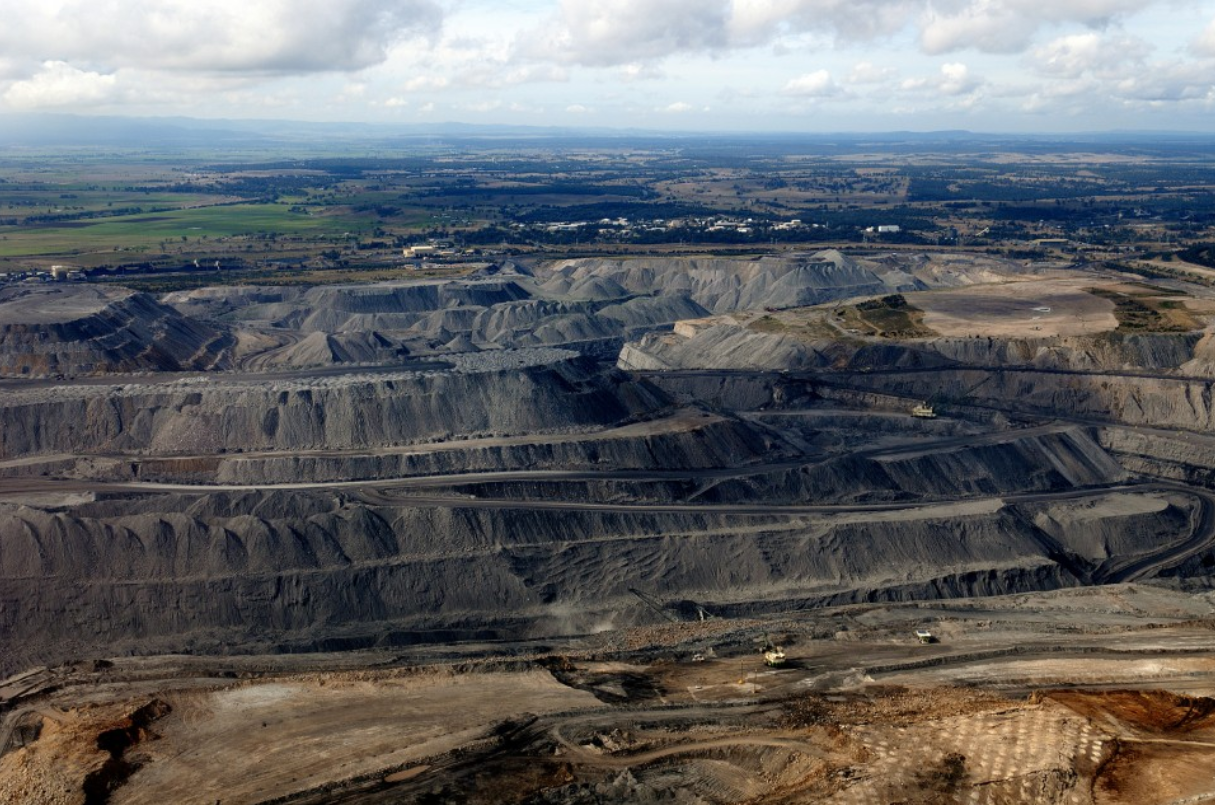
  • Open-pit, open-cast or open cut mining disturbs landscapes on a vast scale, destroying forests and scraping away soils. So severe is the damage, in most cases it cannot be repaired. When mines unearth and disturb rock and earth, toxic chemicals within can mix with water. This leads to acid main drainage, harmful to streams, soils, and plants, animals and people.
  • People living near the destruction are 50% more likely to die of cancer and 42% more likely to be born with birth defects compared with other people.
  • Shifting to clean, safe solutions including renewable energy; close down coal power plants and prevent new ones being built.
  • Coal industry's true costs including the harm it does to our air, water, lands and health are enormous.
  • 23 countries, states and cities will have either phased out coal-fired power plants or set a timeline to do so by 2030.
  • To avoid catastrophic climate change, it is clear that we must end our dependence on coal and invest in affordable and sustainable renewable energy. We need make the shift to 100% renewable energy as soon as possible.
  • The renewable "fuels" used — sun, wind, water, and heat from the earth — are unlimited and free for the taking. It's an obvious advantage over volatile costs of fuels needed to power coal, oil, gas and nuclear plants.
  • Greater energy efficiency is key to a clean, safe and secure energy future for all. We must make better use of energy from the sun, wind, water and earth. Efficiency is all about smart use of energy, not doing without. It saves us money, helps the environment, and improves our health and comfort. It is to get things done using less energy.
  • It’s time we end the age of fossil fuels and help workers and communities transition over to renewables.


With less than 1C of temperature increase so far, we are already seeing some profound changes, including a collapse in Arctic sea ice coverage. It is impossible to say what changes another three or four degrees would bring, but the impacts could very plausibly include a collapse in global food production, catastrophic droughts and floods, heatwaves and the beginning of ice-sheet melt that could eventually raise the sea level enough to wipe out many of the world's great cities. But can we bring ourselves to prioritise a safe planet over cheap fuels, flights, power and goods? Can humanity muster the restraint and cooperation needed to leave assets worth trillions in the ground?