Showing posts with label labour participation rate. Show all posts

Sunday, 28 January 2018

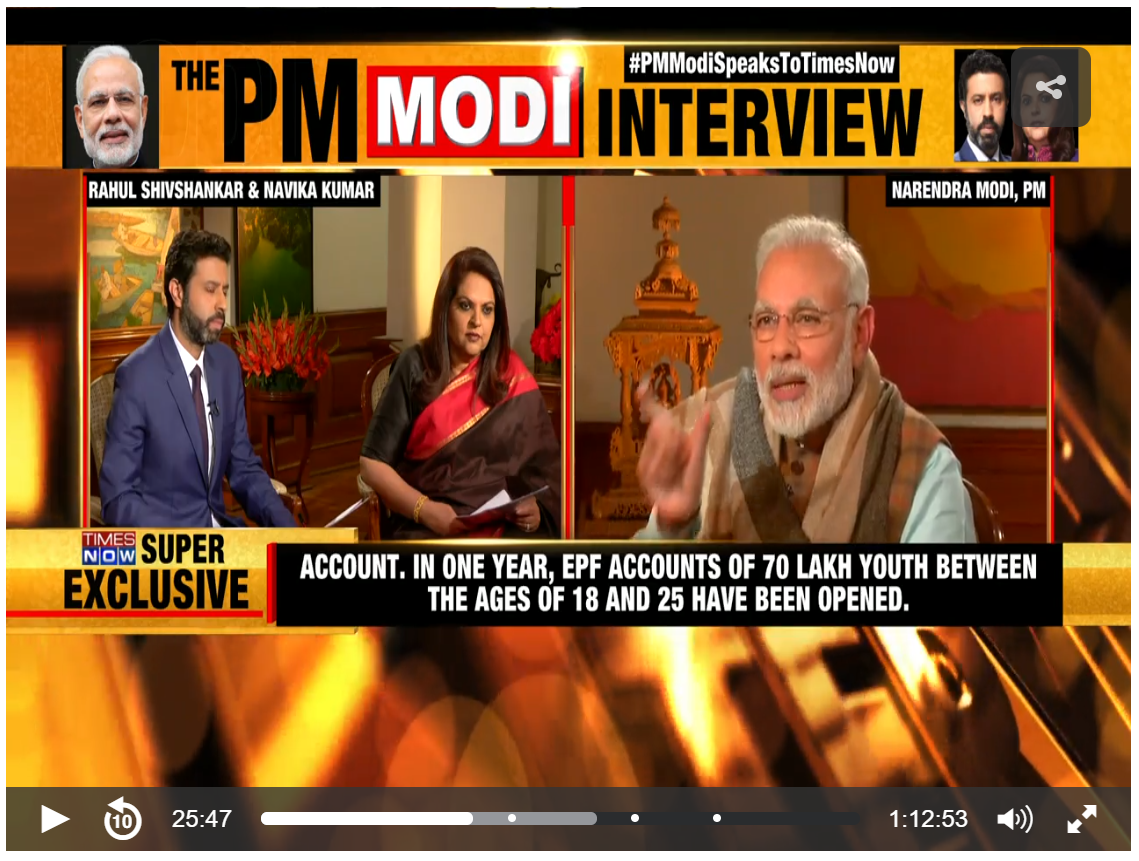
70 lakhs jobs in 2017 - a blatant bluff


Prof Pulak Ghosh and Dr Soumya Kanti Ghosh created a minor storm when they claimed that 70 lakh new ‘payroll’ jobs will be created in India in the organised sector in 2017-18. They reported that the EPFO manages a corpus of over Rs 11 lakh crore for its 550 lakh subscribers. According to the authors, 45.4 lakh new subscribers in the age band 18-25 years had enrolled under the EPFO in 2016-17 and started making their monthly contributions to the Fund. They also found that 36.8 lakh new subscribers in the same age band had enrolled between April and November 2017 and, therefore, they estimated that, for the full year 2017-18, 55.2 lakh new subscribers would be enrolled.
  • Seventy lakh new jobs is a claim that will take one’s breath away. The total ‘payroll’ stock as on March 31, 2017, was 919 lakh. It has taken the country 70 years to create a ‘payroll’ stock of 919 lakh jobs but, miraculously, in just 12 months, the country will generate 70 lakh new ‘payroll’ jobs — that is nearly 7.5 per cent of the current stock!
  • By comparison, China with a GDP five times that of India, adds about 150 lakh jobs a year.
  • If organised sector that employs 20 or more persons can generate 55 lakh new jobs in a year that qualified for enrollment under the EPFO, then we can declare that India has truly and comprehensively slain the demon of unemployment!
  • If we assume that for every ‘payroll’ job counted by the authors there will be another job created in the informal sectors, then the count will rise to 140 lakh in 2017-18. According to the Ghoshs’ report, 150 lakh persons enter the labour force every year of which 66 lakh is skilled manpower. Soon, the problem will not be joblessness but lack of jobseekers!
  • The authors also pointed out that the limited data available in the public domain indicated that the number of contributing members in the EPFO grew by 7% in 2014-15 and 8% in 2015-16 but, according to the Ghoshs’ report, the number jumped by 20% in 2016-17 and by a further 23% up to December 2017.
  • The EPFO data indicates that the number of contributing members decreased from 4.62 crore in July to 4.38 crore in September this year (2017).
  • The PM Modi referred to the MUDRA scheme and said “over 31 million loans have been sanctioned to entrepreneurs. Even if conservatively each enterprise creates one sustainable job, this initiative itself amounts to 31 million new jobs.” Alas!
  • It seems Modi is intentionally confusing by mixing up self employment' as jobs and misleading. While a 'job' is certain, regular and reasonably secure, self employment is not. What we are talking about is jobs in formal sector.
  • If we equate self employed, under employed and casual employed as job holders, then there is neither unemployment nor joblessness.
  • Labour participation rate is a ratio of all adults willing to work, whether employed or unemployed, to the total population. This ratio was 48% in Jan 2016. It fell to below 45% in Nov 2016. Now it reached 43% in July 2017. Most Indians choose not to work. Low labour participation rate hinders economic growth. Labour participation rate in China is 71%. The world average is 63%. Other major countries are Indonesia with a labour participation rate of 67%, Pakistan (54%), Nigeria (56%), Bangladesh (62%) and Philippines (65%).
  • The 70 lakh jobs claim, as claimed by Modi, is not only a misleading boast but also a blatant bluff.

PM Modi’s recent assertion that a person earning Rs 200 a day by selling pakodas is also employed. The fact that the prime minister actually celebrates this kind of ’employment’ as a major success of his Mudra scheme is even more worrisome. It is not a pride that millions are managing to eke out a meagre income. Instead it should be seen as a sign of under-employment.

India is witnessing jobless economic growth during the past three years and the government doesn't know how to create jobs and hence making all false claims and propaganda. Demonetization and GST's faulty roll out have had destroyed informal sector employment. MNREGA was able to provide just 50 days of work against guarantee of 100 days. Mudra loans aimed at promoting  micro enterprises averaging Rs.43,000 is just useless and serves very little purpose. We all know that politicians speak lies, nothing but lies but we do expect Prime Minister to be truthful to the nation.


Friday, 1 September 2017

Unemployment in India

Unemployment, irregular jobs and low salaries continue to hurt India while it continues to embrace labour reforms. Around 77% families have no regular wage earner and more than 67% have income less than Rs 10,000 a month. Unemployment is higher in urban areas, among women, among educated and in agriculture sector. A society where a large proportion of the labour force is unemployed suffers from poverty and vulnerability. An increase in unemployment reduces aggregate spending power, slows down the economy and it increases the vulnerability of households to deal with economic shocks. Govt's employment through various schemes like MGNREGA, at an expense of about Rs.48,000 crores, failed to remove unemployment problem due to corruption and bureaucratic apathy in implementation. 
  • Unemployment Rate in India averaged 7.32% between 1983 and 2013, with a high of 9.40% in 2009 and low of 4.90% in 2013. Unemployment in India is projected to increase to 17.8 million in 2017.
  • On Nov 22, 2013, as BJP's prime ministerial candidate Narendra Modi at an election rally in Agra had promised creation of 1 crore jobs every year if his party won the election. 
    The BJP manifesto stated that “The country has been dragged through 10 years of jobless growth by the Congress-led UPA government. Under the broader economic revival, BJP will accord high priority to job creation and opportunities for entrepreneurship.”
    After three years of government formation, job creation remains the worst failure of the government as the job creation remained lowest in eight years.
  • In 2015 only 1.35 lakh jobs were added, compared to 9.3 lakh jobs that were added in 2011-12 during UPA regime.
  • About 15 lakh jobs were lost in the first four months of 2017 as the number of employed people came down from 406.5 million to 405 million. Each year 12 million people enter the workforce and 65% of India's population are under the age of 35. 
  • Labour participation rate is a ratio of all adults willing to work, whether employed or unemployed, to the total population. This ratio was 48% in Jan 2016. It fell to below 45% in Nov 2016. Now it reached 43% in July 2017. Most Indians choose not to work. Low labour participation rate hinders economic growth.
  • There were only seven countries in the world that had a labour participation rate of 43% or less. These are Iraq, Puerto Rico, Moldova, Syria, Timor-Leste, Samoa and Jordan. Labour participation rate in China is 71%. The world average is 63%. Other major countries are Indonesia with a labour participation rate of 67%, Pakistan (54%), Nigeria (56%), Bangladesh (62%) and Philippines (65%).
  • In India, the unemployment rate measures the number of people actively looking for a job as a percentage of the labour force. In 2016, the country’s unemployment rate was 7.97%, with rural unemployment at 7.15% and urban unemployment at 9.62%.
  • Shift in the pattern of employment from permanent jobs to casual and contract employment has adversely affected the wages, employment stability and social security of the workers.
  • Why do so many Indians choose not to work? Indians are neither lazy nor rent-seekers by nature. The problem is in the lack of good jobs; in opportunities to work in a place where meritocracy rules and one can work hard with dignity and honesty for growth and prosperity. If such jobs are available in good numbers Indians will definitely choose to work.
  • A jobless growth is neither sustainable nor desirable. It is a dangerous trend that creates social tension and disharmony. It spreads further inequality, which may lead to societal collateral damage.  
  • It is the young who are losing jobs and it is the young again, who have stopped looking for jobs although they are unemployed. Young people are not ready to take jobs which are considered to be socially degrading or lowly. Such youngsters could easily stray into unlawful activities. 
  • Causes of unemployment in India: (1) Growth of population (2)Underdevelopment of the economy (3) Slow growth in the agricultural sector (4) Defective system of education (5) Absence of manpower planning (6) Degeneration of village industries (7) Inappropriate technology (8) Slow growth of industrial sector (9) Immobility of labour and (10) Jobless growth.
  • While unemployment is an important problem India faces, more serious problem is severe underemployment with workforce struck in low-productivity & low-wage jobs. Skilled people gets jobs easily and hence skill development among the youth is imperative.
  • Achieving higher economic growth, in the range of 8% to 10%, is necessary to solve the problem of jobless growth.

Very few governments think about youth unemployment 
when they are drawing up their national plans ... Kofi Annan

Long-term unemployment makes a worker less employable.

Quite often the unemployed youth commit crimes to earn their living. Due to lack of opportunities in India, intelligent youth migrate to foreign countries. Their intellectual abilities are used by foreign countries which causes loss to India. Unemployment impacted organisational practices. It has resulted in unfair and corrupt practices in organisations such as low wages, harassment, fake muster rolls etc. The attitude of some private sectors towards employees is unfair on account of availability of surplus labour. Modi after becoming PM had enjoyed touring the world and delivering charismatic speeches and playing rogue politics in India. Midway the term he unleashed senseless demonetization which didn't achieve any of its intended objectives but left nation and its poor suffer unintended consequences. Thereafter, mangled and hurriedly rolled out GST is impacting economy and GDP growth like never before. Demonetization and GST are responsible for GDP growth slipping from 8.1% to 5.7% instead of growing to over 10%. 1% GDP growth loss roughly means loss of 1 million jobs. While recovery is certain after few years, in the meantime poor, peasants and lower classes are paying bitter price for no fault of theirs and for Modi's wild & blind adventures.